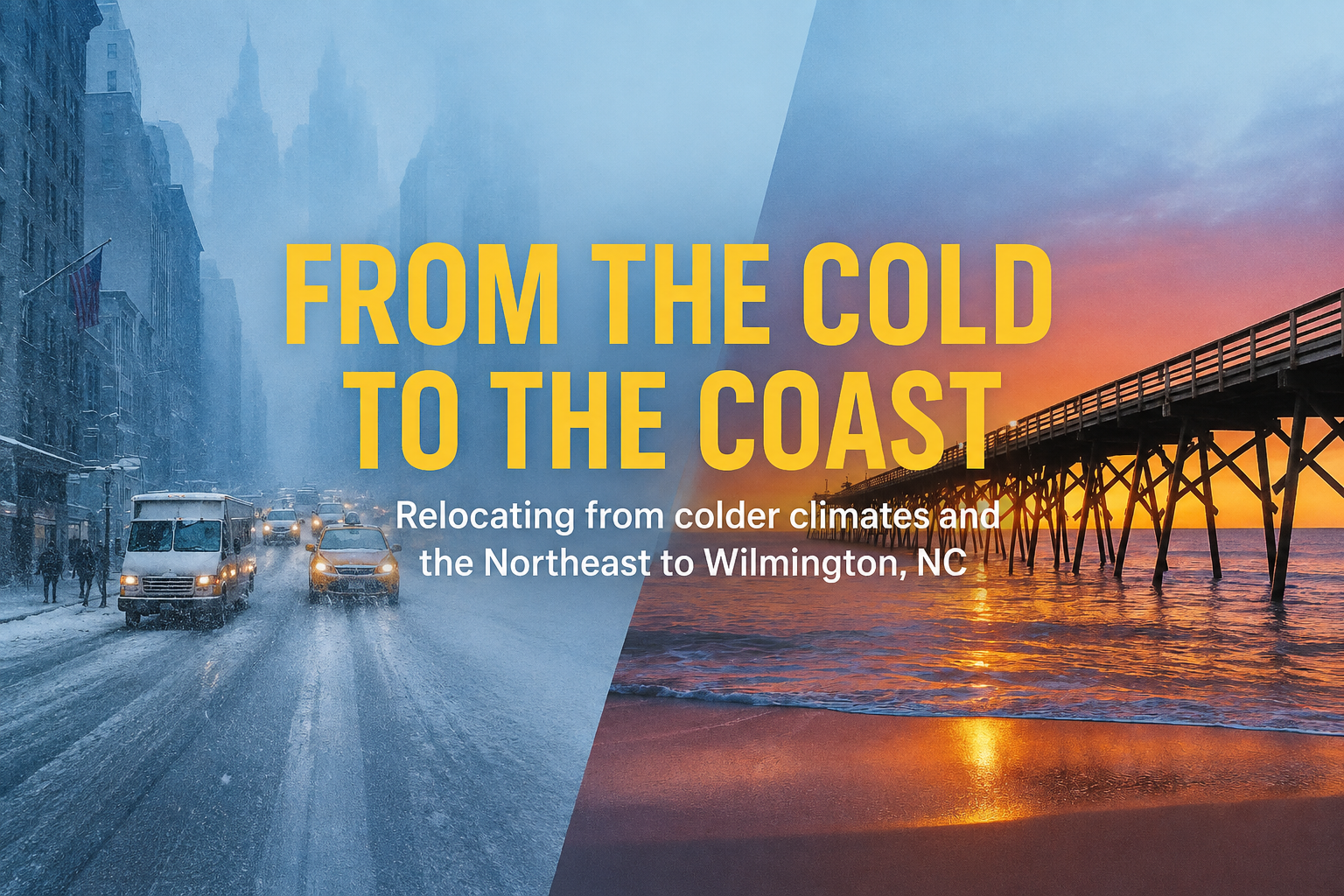
For many people living in New York, New Jersey, Pennsylvania, Connecticut, Massachusetts, and other parts of the Northeast, there comes a point when another winter, another property-tax bill, or another stressful commute leads to a simple question:
Is there a better way to live?
Increasingly, Northeasterners are finding their answer along the North Carolina coast—especially Wilmington and the greater Cape Fear region.
Relocating south doesn’t necessarily mean giving up the things you enjoy about the Northeast. Wilmington offers restaurants, culture, historic neighborhoods, healthcare, shopping, an airport, and an active community—but combines them with beaches, waterways, milder winters, and a noticeably different pace of life.
For many people, the move isn’t simply about changing where they live.
It’s about changing how they live.
1. Trade the Snow Shovel for the Beach Chair

One of the most immediate differences is the weather.
Winters along the southeastern North Carolina coast are generally much milder than those in the Northeast. Snow is uncommon, and the climate allows residents to spend considerably more time outdoors throughout the year. Wilmington’s mild temperatures and proximity to the water are among the qualities that continue to attract visitors and new residents.
Instead of months dominated by snow, ice, road salt, and freezing temperatures, coastal living can mean winter afternoons spent golfing, walking the beach, biking, boating, or enjoying lunch outside.
For someone who has spent decades dealing with Northeast winters, that alone can feel like a lifestyle upgrade.
Picture suggestion: A wide sunrise or sunset photograph of Wrightsville Beach with the caption “Imagine this being your backyard instead of your vacation.”
2. The Ocean Becomes Part of Everyday Life
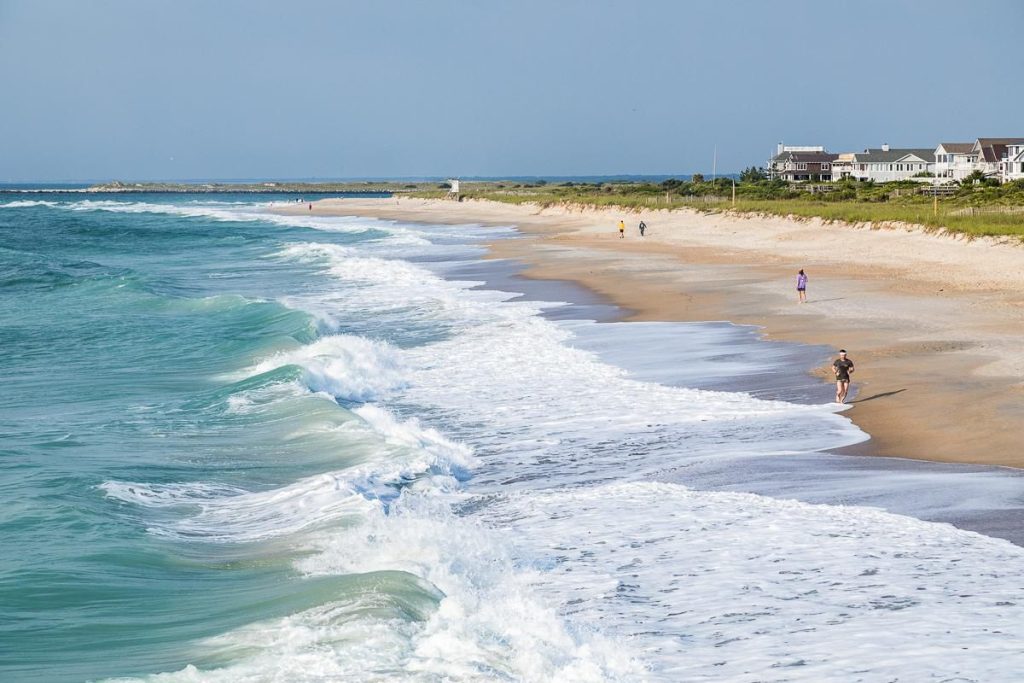
There’s an important difference between vacationing at the beach and living near the beach.
When you live in the Cape Fear region, a trip to the ocean doesn’t have to be a weeklong vacation planned months in advance.
Wrightsville Beach, Carolina Beach and Kure Beach provide access to surfing, fishing, paddleboarding, boating, kayaking, beach walks and waterfront dining.
You can spend Saturday morning at the beach, head home for the afternoon, and meet friends for dinner downtown that evening.
That’s the appeal of coastal living: the lifestyle you once saved for vacation can become part of an ordinary week.
3. Your Housing Dollars May Stretch Further
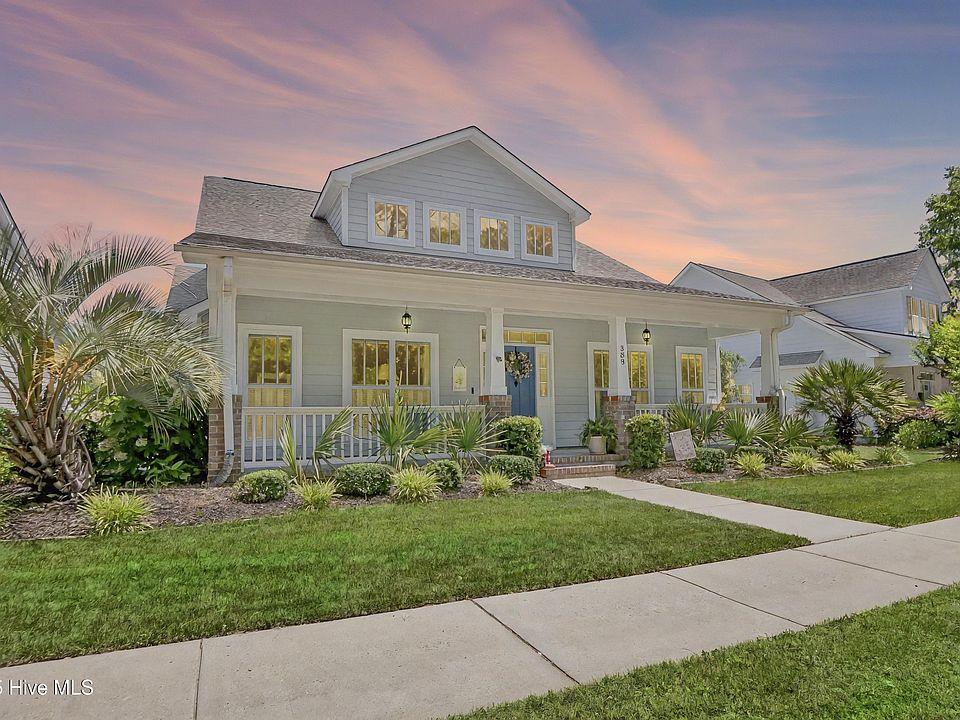
For homeowners relocating from many higher-cost Northeastern markets, coastal North Carolina can offer an attractive financial alternative.
The comparison varies tremendously depending on the community, but buyers coming from areas such as Long Island, northern New Jersey and other expensive Northeast markets may find opportunities for more living space, newer construction, larger lots, community amenities, or lower annual property taxes than they are accustomed to.
That can create possibilities such as:
- Downsizing the mortgage without necessarily downsizing your lifestyle
- Moving into newer construction
- Finding a home with more outdoor living space
- Choosing a golf, boating or amenity-rich community
- Living closer to the water
- Reducing some of the carrying costs associated with homeownership
Of course, purchase price isn’t the entire equation. Coastal buyers also need to consider homeowners insurance, wind and hail coverage, potential flood insurance, HOA dues and property-specific maintenance costs.
That’s why comparing total ownership cost is far more useful than simply comparing home prices.
4. Property Taxes Can Be an Eye-Opener
This can be one of the biggest surprises for someone relocating from a high-property-tax Northeastern state.
North Carolina property taxes vary by county, municipality and property, but homeowners relocating from places such as New Jersey and parts of New York may see a significant difference in annual property-tax expenses.
Over five, ten or twenty years of homeownership, that difference can become substantial.
For retirees and empty nesters especially, lowering recurring housing expenses can be just as important as finding the perfect house.
Picture suggestion: Create a simple graphic reading “What Could Lower Annual Housing Costs Mean for Your Lifestyle?” over a photo of a coastal Carolina home.
5. You Don’t Have to Choose Between the Beach and a Real City
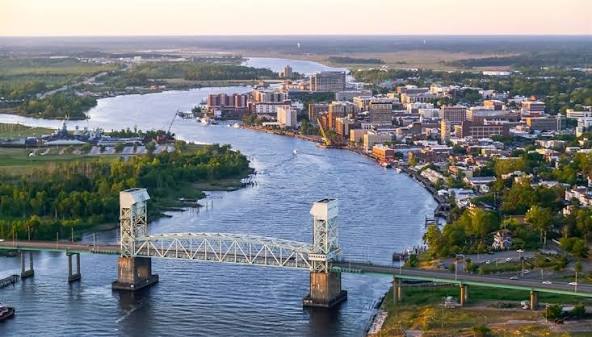
One of Wilmington’s biggest advantages is that it isn’t simply a seasonal beach destination.
Downtown Wilmington sits along the Cape Fear River and offers historic architecture, restaurants, breweries, entertainment, shopping and the Riverwalk. Meanwhile, the Atlantic Ocean and surrounding beach communities are nearby.
That creates an unusual combination:
Historic river city + Atlantic beaches + suburban communities + coastal lifestyle.
You can choose a downtown condominium, an established Wilmington neighborhood, a golf community, new construction, a suburban home in Brunswick or Pender County, or a property closer to the beach.
In other words, relocating to the Wilmington area doesn’t require everyone to adopt the same version of coastal living.
6. Outdoor Living Becomes a Way of Life
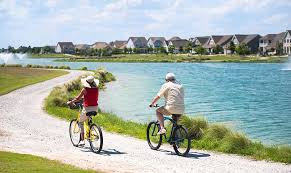
In the Northeast, outdoor recreation can be highly seasonal.
Along the North Carolina coast, the season is considerably longer.
Boating, fishing, golf, pickleball, cycling, kayaking, paddleboarding and walking are all part of the area’s lifestyle. Wrightsville Beach, for example, is particularly known for water recreation, sailing, surfing and its popular walking loop.
Even if you’ve never considered yourself particularly outdoorsy, living near the coast has a way of changing your routine.
Sometimes it’s as simple as realizing that on a random Tuesday evening, you can drive toward the water just to watch the sunset.
7. A Slower Pace—Without Being Disconnected
Ask many former Northeasterners what feels different after moving south, and eventually you’ll hear some version of:
“The pace is different.”
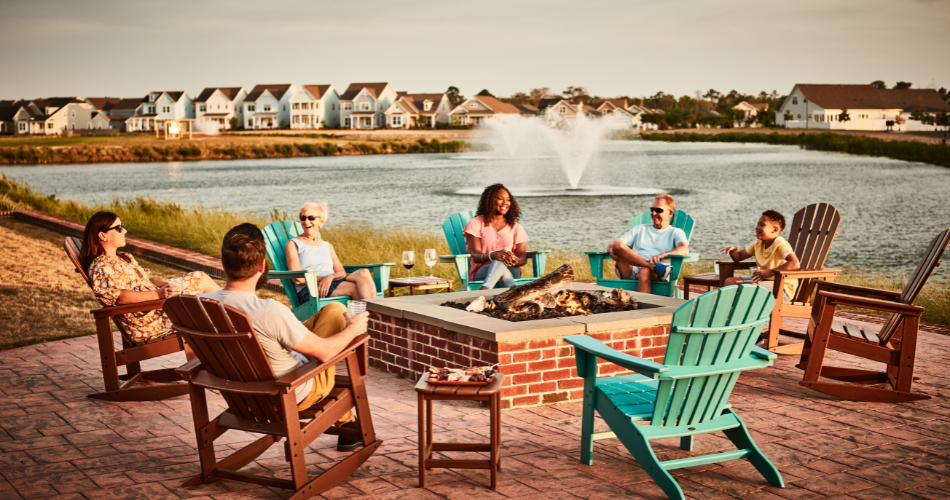
That’s not to say Wilmington is sleepy. The region has grown rapidly and continues to attract newcomers. But compared with the constant intensity of many Northeast metropolitan areas, everyday life can feel more relaxed.
And importantly, you aren’t isolated.
Wilmington provides shopping, dining, healthcare, entertainment and Wilmington International Airport, while larger destinations such as Raleigh, Myrtle Beach and Charleston are accessible for weekend trips.
You can slow things down without feeling like you’ve moved away from civilization.
8. There’s a Community for Almost Every Version of Coastal Living

Another advantage of relocating to the Cape Fear region is variety.
Want to be close to restaurants and nightlife? Consider Wilmington.
Want a classic beach-town atmosphere? Explore Carolina Beach or Kure Beach.
Want boating and proximity to the Intracoastal Waterway? Look around Wrightsville Beach, Ogden or Porters Neck.
Prefer newer communities and amenities? Explore areas such as Riverlights or growing communities across Brunswick County.
Want more space while remaining within reach of Wilmington and the beaches? Leland, Hampstead and other surrounding communities open additional possibilities.
The key isn’t simply finding a great house.
It’s finding the community that fits the life you want to live.
9. You’ll Probably Meet Plenty of Other Northeastern Transplants

One concern people sometimes have when relocating hundreds of miles away is starting over socially.
The Wilmington area is already home to many people who made similar moves.
New Jersey, New York, Pennsylvania and other Northeastern states are well represented among newcomers to the region. Community organizations, recreational groups, golf and pickleball leagues, boating groups, volunteer organizations and neighborhood activities can provide opportunities to establish new connections.
You may move south expecting to leave the Northeast behind—only to discover your new neighbor grew up two towns away from you.
10. Coastal Living Isn’t Perfect—and That’s Important to Understand
A successful relocation should be based on reality, not a vacation brochure.
Coastal North Carolina has its tradeoffs.
Summers can be hot and humid. Hurricane preparedness is part of coastal life. Insurance costs vary significantly depending on a home’s location and construction, and some properties may require flood insurance. Traffic has also increased as the Wilmington region has grown.
Those aren’t reasons to avoid moving here.
They’re reasons to work with someone who understands how flood zones, insurance, neighborhoods, commute patterns, property taxes and proximity to the coast can affect both your lifestyle and your budget.
Maybe It’s Time to Stop Vacationing Where You Want to Live
For many Northeasterners, the attraction of coastal North Carolina isn’t one single thing.
It’s waking up without scraping ice from the windshield.
It’s having the Atlantic Ocean nearby.
It’s spending more of the year outside.
It’s discovering that your housing budget may provide choices you didn’t expect.
It’s having dinner along the Cape Fear River, walking Wrightsville Beach in the morning, or deciding on a Saturday afternoon that you’re going boating.
Most importantly, it’s the possibility of designing the next chapter of your life around how you want to live rather than simply where you’ve always lived.
Thinking About Moving from the Northeast to Coastal North Carolina?
Relocation involves much more than searching online for houses.
You need to understand which communities match your lifestyle, what your budget really buys, how taxes and insurance affect your monthly costs, and what living in the area is actually like after vacation ends.
Chris Meek Realty, in partnership with the Secure Home Finder Team at LPT Realty, helps buyers explore Wilmington and communities throughout New Hanover, Brunswick, Pender and the surrounding Cape Fear region.
Whether you’re coming from Long Island, New York City, New Jersey, Pennsylvania, Connecticut, Massachusetts or elsewhere in the Northeast, I’ll help you compare communities and find the place that feels right—not just the house that looks good online.
Chris Meek Realty
Making Carolina Dreams a Reality, One Home at a Time.
📞 910-231-1553
✉️ Chris@ChrisMeekRealty.com
🌐 ChrisMeekRealty.com
Ready to trade snow days for beach days? Let’s start planning your move to Coastal Carolina.
Leave a Reply